Rolling on Empty: What Your Skateboard Wheels Are Actually Doing to Your Game
Most skaters will drop serious cash on a quality deck without blinking. They'll obsess over truck geometry, swap bearings like they're tuning a race car, and still roll out of the shop on a set of bargain-bin wheels because, hey, they're just wheels, right?
Wrong. Dead wrong.
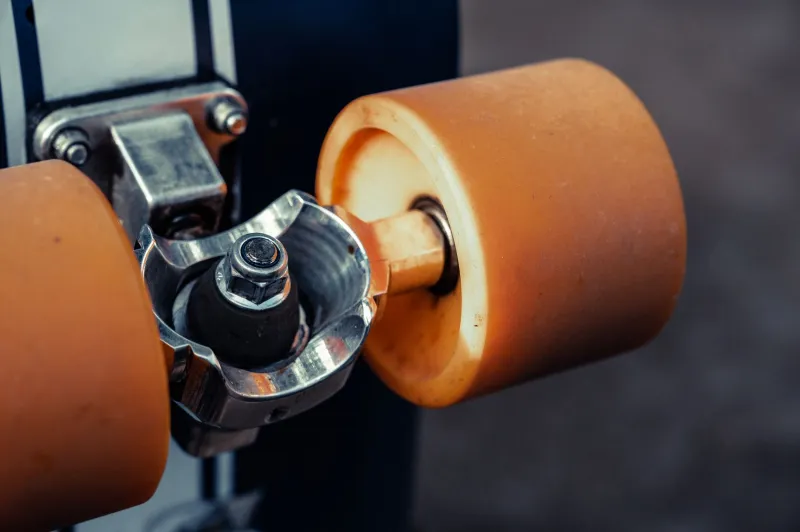
Wheels are the only part of your setup that actually touches the ground — every single second you're riding. They absorb impact, translate your push into speed, and either hold their shape through a hard landing or develop that soul-crushing flat spot that turns your smooth roll into a jackhammer ride. Understanding what's going on inside those little urethane cylinders isn't just nerdy — it's the difference between skating well and skating frustrated.
The Flat Spot Problem Nobody Talks About
Flat spots happen when a wheel stops spinning mid-slide and grinds against the pavement, shaving off a chunk of material in one brutal instant. You've felt it — that rhythmic thudding that rattles your feet and your confidence equally. Once a flat spot forms, it doesn't fix itself. That wheel is done.
Here's the thing: flat spots aren't random bad luck. They're a direct result of wheel composition, hardness, and how well the urethane formula can handle heat and friction. Cheap wheels use low-grade urethane that breaks down fast under stress. The molecules in budget urethane aren't bonded as tightly, which means they shed material more quickly and lose their round shape way before their time.
Premium wheels — the kind coming out of brands like Spitfire, Bones, and OJ — invest heavily in proprietary urethane formulas. Spitfire's Conical Full shape paired with their Formula Four urethane, for example, is specifically engineered to resist flat spots under the kind of abuse street skating delivers daily. That's not marketing fluff. That's material science.
Hardness Is a Lifestyle Choice
Wheel durometer — the hardness rating measured on the "A" scale — is one of the most misunderstood specs in skating. Walk into any skate shop and you'll see wheels ranging from 78A all the way up to 101A. Beginners often grab whatever's cheap, which is a mistake that costs them both money and performance.
For street skating on concrete plazas, parking lots, and urban ledges, you generally want something in the 99A–101A range. Harder wheels slide more predictably, hold speed better on smooth surfaces, and are less likely to grip unexpectedly during technical tricks. Softer wheels — think 78A to 87A — are built for cruising and rough terrain, offering a smoother ride but way more rolling resistance and a higher flat-spot risk during power slides.
There's a middle ground worth knowing about, too. The 88A–97A range works well for skaters dealing with rougher city pavement who still want to throw tricks. Chicago skaters dealing with cracked Midwest concrete, for instance, often prefer something in the 95A zone — hard enough to pop clean, soft enough not to get eaten alive by the terrain.
"I tried going full 101A one summer and my ankles were destroyed within a week," says Marcus, a street skater from Philadelphia who's been shredding since 2016. "The ground was just too rough. Dropped down to 97A and it was like night and day — still got the response I wanted but stopped rattling my teeth out."
Size Matters — But Not How You Think
Wheel diameter (measured in millimeters) affects everything from your ride height to how quickly you can pop a trick. Smaller wheels, in the 50–53mm range, sit lower to the ground and accelerate faster — ideal for technical street skating where you want snappy response. Larger wheels, 55mm and up, maintain speed better and roll over cracks more smoothly but add height to your setup and can cause wheel bite if you're not running riser pads.
The street skating sweet spot sits right around 52–54mm for most setups. Big enough to handle urban terrain without rattling your fillings out, small enough to keep your center of gravity low for flip tricks and ledge work.
What a lot of skaters ignore is the relationship between wheel size and bearing load. Larger wheels put more rotational stress on your bearings, which means they wear out faster — especially if you're buying ABEC-3 bearings to save a few bucks. The whole system works together, and cutting corners on any one component affects everything else.
The Economics of Cheap Wheels
Let's talk money, because this is where the math gets interesting.
A set of no-name wheels might run you $15–$20. Sounds like a win until you flat-spot two of them in three sessions and have to replace the whole set. Do that four times in a season and you've spent $60–$80 on garbage urethane that actively made you worse.
A quality set of Bones STF or Spitfire Formula Fours runs $35–$50. They last dramatically longer under real street conditions, maintain their performance characteristics across hundreds of sessions, and — critically — they don't punish you with flat spots every time you throw a power slide. Over a full season, you're almost certainly spending less and skating better.
"I used to think expensive wheels were for pros," admits Destiny, a 19-year-old skater from Atlanta who started taking her setup seriously last year. "Then my coach at the academy broke down the actual cost per session and I felt dumb. I've had my current set for four months and they're still rolling perfect."
Extending Wheel Life Without Going Broke
Even quality wheels benefit from smart maintenance habits. Rotating your wheels — swapping front and back — extends their life by evening out wear patterns. Front wheels typically wear faster because they absorb more braking friction, so rotating them every few weeks keeps the whole set wearing evenly.
Surface matters too. Skating exclusively on rough concrete will chew through any wheel faster than smooth park surfaces. If you're a street skater hitting rough urban terrain regularly, factor that into your wheel selection — slightly softer durometer, slightly larger diameter, and definitely a premium urethane formula.
Keeping your bearings clean also reduces the load on your wheels. Dirty, sluggish bearings create drag that forces your wheels to work harder, generating more friction and accelerating wear. A basic bearing cleaning kit costs less than ten bucks and takes fifteen minutes. There's genuinely no excuse.
The Bottom Line
Wheels are infrastructure. They're the foundation everything else in your skating is built on, and treating them like an afterthought is like building a house on sand. Understanding durometer, diameter, urethane quality, and basic maintenance isn't about being a gear nerd — it's about respecting your craft enough to give yourself the best possible shot at progression.
The streets don't care about your excuses. But they will reward you for showing up prepared.