Ride Together, Rise Together: Why Your Skate Crew Is the Most Important Gear You'll Ever Have

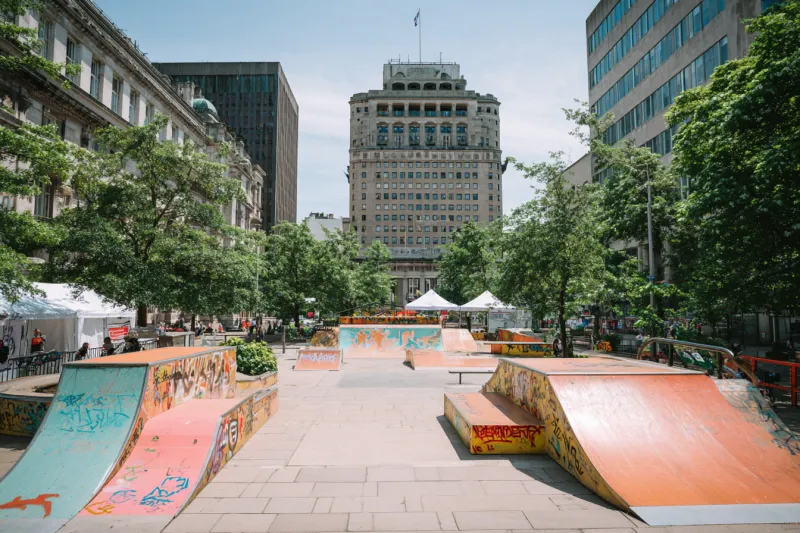
Photo: Evgeny2665, CC0, via Wikimedia Commons
There's a version of skateboarding that lives in your head—the solitary figure under a streetlight, grinding rails at 2 a.m., answering to nobody. It's a powerful image. Hollywood loves it. Skateboarding's own mythology has leaned into it for decades. But spend any real time in the actual street skating scenes of New York, LA, Chicago, or Atlanta, and that lone wolf fantasy starts looking pretty thin.
The skaters who are actually putting in work, actually progressing, actually still skating ten years from now? They're almost never doing it alone.
The Crew Isn't a Bonus — It's the Infrastructure
Talk to skaters who've been riding streets seriously for more than a few years and a pattern emerges fast. The crew isn't just a social add-on to skating. For most of them, it is skating. It's the thing that gets you out of bed for a dawn session. It's the accountability that keeps you showing up when your kickflip still looks like garbage. It's the person who knows the spot, who's got the extra wax, who filmed your best clip on a borrowed phone.
Marcus, a 24-year-old skater from Chicago's South Side who's been riding with the same core group for six years, puts it plainly: "Before I had a real crew, I'd skate maybe twice a week if I was lucky. Now we're out four, five times. You don't want to be the one who didn't show up."
That social pressure isn't toxic—it's motivating. Skateboarding research and sports psychology both point to the same thing: peer accountability is one of the most reliable drivers of consistent practice. And consistent practice is the only thing that actually makes you better.
What Crews Do That Solo Sessions Can't
Beyond just showing up more often, skating with a crew changes the quality of your sessions in ways that are hard to replicate alone.
Instant feedback. When you're alone, you're guessing. When you're with your crew, someone's watching your foot placement, catching what you're doing wrong on your approach, or just hyping you up enough to try the thing one more time. That real-time feedback loop accelerates progression faster than any tutorial video.
Spot knowledge. Crews in cities like Philadelphia and San Francisco have spent years mapping their local terrain—knowing which ledges are waxed and which security guards are actually chill, which spots dry fastest after rain, which parking garages are worth the risk. That institutional knowledge lives in the crew and gets passed down. You don't build that alone.
Mental health and belonging. This one doesn't get talked about nearly enough. Street skating can be physically brutal and mentally exhausting. The rejection of a trick you've been working for weeks, the frustration of getting kicked out of a spot, the grind of skating in a city that wasn't built for you—those things wear on you. A crew gives you a place to belong, people who get it without explanation, and a reason to laugh at yourself when you eat pavement for the fifth time in an afternoon.
Research consistently shows that social connection is one of the strongest predictors of long-term participation in any physical activity. Skateboarding is no different.
Crews Across America Are Rewriting the Culture
Look at what's happening in cities across the country and you'll see crews operating less like loose friend groups and more like organized creative collectives.
In Atlanta, crews like the ones coming out of the Old Fourth Ward scene are blending skating with filmmaking, building their own video series, and creating local brands that give their members actual economic pathways. In LA, crews are collaborating with muralists and musicians, turning skate videos into genuine cultural documents. In New York, tight-knit groups are actively fighting for access to public spaces and organizing community skate days that bring in kids who'd never have found the scene otherwise.
This isn't your older brother's skate crew hanging out behind a 7-Eleven. These are intentional communities with shared values, creative output, and real social impact.
How to Find Your Crew (Without Being Weird About It)
If you're a newer skater reading this and thinking, "Cool, but I don't have a crew"—here's the honest truth: most people in your position are waiting for someone else to make the first move. Don't be that person.
Go where skaters already are. Local skateparks are the obvious starting point, but street spots are where you'll find the more committed riders. Show up consistently. Nod, say hey, watch what people are working on. You don't need to introduce yourself with a speech—just be a regular face.
Film something for someone. Offering to film a clip for someone you don't know yet is one of the most universally appreciated gestures in skate culture. It's a no-pressure way to start a conversation and immediately make yourself useful.
Use Instagram and local skate Discord servers. Most active skate scenes in US cities have some kind of online presence. Search your city plus "skate crew" or "street skating" on Instagram, or look for Discord communities tied to local shops. Urban Skate Academy's own community boards are a solid place to start connecting with riders in your area.
Start small and be consistent. You don't need ten people to have a crew. Two or three reliable people who show up and push each other is more than enough to change your skating entirely.
Building One From Scratch
Maybe you're in a smaller city, or your local scene feels fragmented. Building your own crew from zero is absolutely doable—but it takes patience and a little strategy.
Start by organizing a session and putting it out there. Post it at your local shop, drop it in a community group, or just invite the two or three skaters you've seen around. Keep it low-key, no pressure. The goal of the first session isn't to build a crew—it's just to have a good time. Do that consistently and the crew builds itself.
Be the person who communicates. Text the spot, share the forecast, send the clip. Crews gel around people who take initiative. It doesn't require any special skill—just showing up and giving a damn.
The Long Game
Here's what the lone wolf myth never tells you: most of the skaters who are still out there grinding rails in their 30s and 40s aren't doing it through sheer individual willpower. They're doing it because they've got people to skate with. The crew is what makes skating sustainable over years and decades, through injuries and job changes and everything else life throws at you.
Skateboarding gave a lot of us a community before we even knew we needed one. Lean into that. Find your people, build something with them, and watch what happens to your skating—and everything else—when you stop trying to do it all alone.