Pad Up or Pay Up: What Street Skaters Actually Need to Stay Healthy (and Broke)
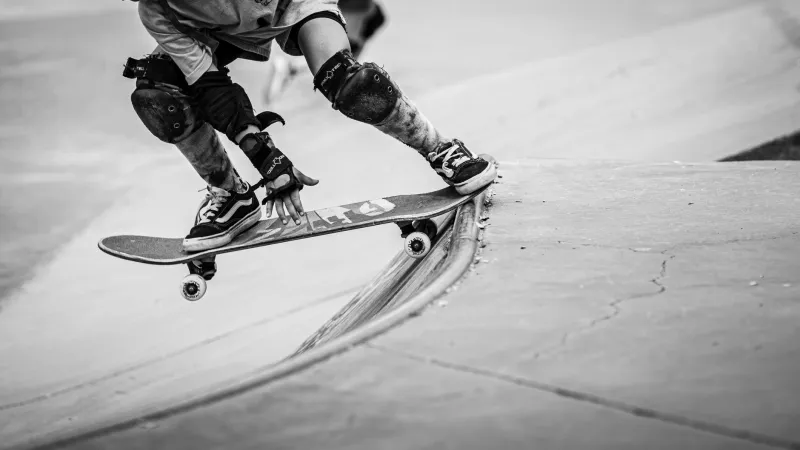
Let's be real — nobody rolls up to the skate spot looking to show off their knee pads. Protection gear has always had an image problem in street skating culture. It reads "beginner" to some, "overcautious" to others. But here's the thing nobody talks about until it's too late: one bad slam can sideline you for months, drain your savings account, and — in worst-case scenarios — change your life permanently.
We talked to skaters who've been there, orthopedic doctors who've stitched them back together, and gear experts who know the difference between protection that actually works and cheap foam that'll crumble on first contact. The verdict? Spending smart on safety gear isn't soft. It's the move that keeps you skating for decades instead of sitting on the couch watching clips.
The Injury That Changes Everything
Marcos Rivera, a 24-year-old street skater from Chicago's Pilsen neighborhood, remembers the exact moment he stopped treating wrist guards as optional. "I was trying a kickflip down a seven-stair. Nothing crazy. I'd done it a hundred times," he says. "Caught my toe, went down hard on my hands. Heard the snap before I felt it."
Two broken bones in his left wrist. Surgery. Eight weeks in a cast. Nearly $22,000 in medical bills — reduced to $6,800 after insurance, which he's still paying off two years later.
"The wrist guards I had were in my bag," Marcos says. "I just didn't feel like putting them on."
His story isn't unusual. According to data from the Consumer Product Safety Commission, skateboarding accounts for roughly 100,000 emergency room visits annually in the United States, with wrist and arm fractures leading the list. Orthopedic surgeon Dr. Priya Mehta, who practices in Los Angeles and has treated dozens of skaters over the years, puts it plainly: "The majority of upper-extremity fractures I see from skateboarding are entirely preventable with proper wrist protection. It's one of those cases where a $40 investment genuinely changes the math."
Breaking Down the Gear: What's Worth It
Wrist Guards — Non-Negotiable
This is where Dr. Mehta and virtually every skate-savvy medical professional start. When you fall, your instinct is to throw your hands out. It's hardwired. Wrist guards with a rigid splint redirect and absorb that impact force before your radius and ulna take the hit.
Worth the splurge: Triple Eight Hired Hands or 187 Killer Wrist Guards ($35–$55). These feature hard plastic splints on both sides of the wrist and breathable materials that actually make them wearable during a full session. Cheaper alternatives from big-box sporting goods stores often use flimsy single-sided splints that shift on impact — defeating the purpose entirely.
Budget pick that still works: Pro-Tec Street Wrist Guards (~$25). Not as durable long-term, but the splint construction is solid enough for regular sessions.
Skip entirely: Generic foam wrist wraps sold as "guards." They provide compression, not protection. Not the same thing.
Helmets — Depends on What You're Doing
Street skaters have complicated feelings about helmets, and honestly, the conversation has nuance. For park skating, transitions, and anything involving height or high speeds, a helmet isn't optional — it's survival math. For low-impact street skating focused on flat-ground tricks, the calculus shifts, though head injuries remain unpredictable.
Worth the splurge: Triple Eight Dual Certified Sweatsaver ($65–$80). It's CPSC and ASTM dual-certified, meaning it meets both bike and skate safety standards. The foam liner is replaceable, extending the helmet's life significantly.
Budget pick: Pro-Tec Classic Skate Helmet (~$40). Meets CPSC standards, available in most skate shops, and doesn't look ridiculous. A solid entry point.
Important note from Dr. Mehta: "Any helmet that takes a significant impact should be replaced immediately, even if it looks fine externally. The foam compresses on impact and won't protect you the same way twice."
Knee Pads — Situational but Smart
For pure street skating on flat ground, knee pads are less critical than wrists and head. But if you're skating transition, learning to fall properly, or skating rougher urban terrain, they're a meaningful investment.
Worth the splurge: 187 Killer Pads Pro Knee Pads ($60–$80). These are what you see at every serious skate park for good reason — the hard cap slides cleanly, the foam absorbs real impact, and they stay put during a session.
Budget pick: Sector 9 Apex Knee Pads (~$30). Lighter construction, but functional for skaters not regularly throwing themselves down stairs.
Elbow Pads — The Underrated One
Elbow fractures and deep abrasions are surprisingly common and surprisingly ignored. A set of elbow pads in the $25–$45 range from brands like 187 or Triple Eight can prevent road rash that takes weeks to heal and infections that cost far more to treat.
The Real Cost-Benefit Math
Let's put actual numbers on this. A full protective setup — quality wrist guards, helmet, knee pads, elbow pads — runs between $150 and $250 if you buy smart. That feels like a lot until you stack it against reality:
- Average urgent care visit for a fracture evaluation: $300–$700
- ER visit with imaging: $1,500–$5,000+
- Orthopedic surgery (wrist): $10,000–$25,000
- Lost wages from 6–8 weeks off work: Variable, but real
"I see skaters all the time who spent $200 on a new deck setup but won't spend $40 on wrist guards," says Dr. Mehta. "The priorities are understandable from a culture standpoint, but medically, it's backwards."
Marcos Rivera, now fully recovered and back on his board, sees it differently these days. "I wear my wrist guards every session now. Every single one. I don't care what anyone thinks. I care about skating when I'm 40."
Learning to Fall: The Free Investment
No gear conversation is complete without this: learning how to fall properly is the highest-return investment you can make, and it costs nothing. Skate instructors and coaches consistently emphasize rolling into falls rather than extending arms rigidly, tucking your chin, and distributing impact across larger muscle groups.
At Urban Skate Academy, fall technique is baked into every beginner lesson — because the best protection isn't always what you're wearing. It's the muscle memory you've built before the slam even happens.
The Bottom Line
Protective gear isn't about being scared of skating. It's about skating more — more sessions, more years, more progression. The skaters who are still killing it at 35 and 45 aren't the ones who avoided gear. They're the ones who were smart enough to protect what they love doing.
Spend the $150. Wear the pads. Stay on your board.