Built by Hand, Owned by the Streets: Inside America's DIY Skateboarding Revolution
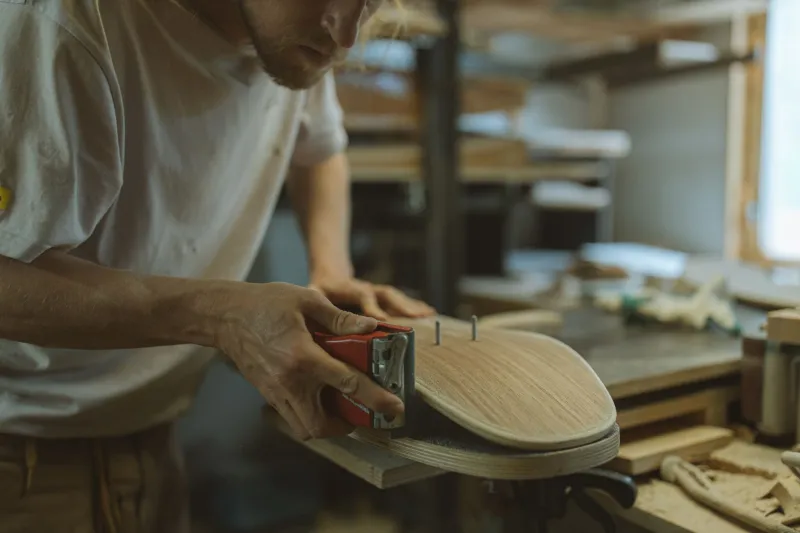
There's a garage in East Detroit where the smell of wood glue and grip tape hangs in the air like incense. Stacked against one wall are seven-ply maple blanks, a hand-press, and enough spray cans to tag a city block. This isn't a factory. It's a skate lab — and the guy running it, 24-year-old Marcus Webb, has never worked a day for a major board company in his life. He doesn't want to.
"The big brands tell you what skating looks like," Marcus says, pressing a fresh deck between two steel plates. "We're out here deciding that for ourselves."
Marcus isn't alone. From Portland to Pittsburgh, Philadelphia to Phoenix, a grassroots wave of independent skaters, small collectives, and backyard craftsmen are pushing back against the polished, algorithm-optimized version of skateboarding that dominates Instagram feeds and corporate sponsorships. They're building their own boards, constructing their own spots, and running their own contests — and the energy coming out of this underground is electric.
Why DIY? Why Now?
It would be easy to frame the DIY movement as pure nostalgia — a reaction to skateboarding's 2021 Olympic debut and the mainstream visibility that followed. But that's too simple. The roots go deeper.
For a lot of skaters, especially those in lower-income neighborhoods and cities without established skate infrastructure, making do has always been the default. You skated the loading dock behind the grocery store. You waxed the curb outside the laundromat. You figured it out. The difference now is that this ingenuity is being celebrated and organized rather than just endured.
Social media — for all its flaws — has given these crews a platform that didn't exist before. A skate collective in Albuquerque can post footage of their hand-built quarter pipe and connect with builders in Cincinnati overnight. The underground has gone networked.
"It was always happening," says Jess Torrance, co-founder of Chicago-based collective Rough Hewn Skate, which organizes both board-building workshops and unsanctioned street competitions across the South Side. "Now people outside the neighborhood can actually see it."
Shaping Culture, One Deck at a Time
Hand-shaping skate decks is a craft that demands patience. Most mainstream boards are pressed in factories using computer-controlled molds, but independent shapers like Marcus work with hand-cut templates, experimenting with concave depth, nose length, and tail geometry in ways that big production runs simply can't accommodate.
The result isn't just a board — it's a statement. Many DIY builders screen-print their own graphics, pulling from local art scenes, neighborhood iconography, or straight-up personal history. Marcus's latest run features a graphic pulled from a photograph of his grandmother's block in the 1980s. You won't find that at the skate shop in the mall.
In Los Angeles, a collective called Freeform Press has taken this ethos further, running community deck-building workshops in Boyle Heights where participants leave with a board they shaped themselves. The sessions are deliberately priced on a sliding scale. "We don't want money to be the reason someone can't make their own board," says co-organizer Diana Reyes. "That's exactly the kind of barrier we're trying to tear down."
Building the Spots Nobody Built for You
If DIY boards represent the craft side of the movement, then DIY skate spots are its architecture. Across the country, crews are transforming neglected urban spaces — empty lots, drainage channels, abandoned parking structures — into functional, often beautiful skate environments.
In Baltimore, a crew called Chesapeake Concrete has spent the last three years quietly pouring their own concrete features under a highway overpass. Banks, ledges, a hip — all built on weekends with donated materials and a whole lot of sweat equity. The spot has no official name on any map. You find it through word of mouth.
This kind of guerrilla construction walks a legal gray line, and the builders know it. But many point out that these are spaces no city government was going to develop anyway. "We're not taking anything from anyone," says one Baltimore crew member who asked to stay anonymous. "We're making something out of nothing."
The DIY spot movement is also producing some genuinely creative design. Freed from the standardized dimensions of commercial skateparks, builders experiment with unusual transitions, rough textures, and features that reward technical skating over raw speed. The spots feel alive in a way that polished concrete parks sometimes don't.
Grassroots Comps: Competing on Your Own Terms
The competitive side of DIY culture deserves its own conversation. Independent skate contests have been bubbling up in cities across the US, organized by collectives rather than brands, judged by community members rather than industry insiders, and filmed on phones rather than broadcast rigs.
Rough Hewn Skate's annual Chicago street contest — now in its fourth year — draws dozens of skaters from across the Midwest, with entry fees kept intentionally low and prizes sourced through local sponsorships from independent shops and small businesses. The vibe is closer to a block party than a televised competition.
"There's no pressure to perform for a camera crew or impress a judge who's never skated your neighborhood," Jess Torrance explains. "You're skating for the people standing right next to you."
This community-first competition model is spreading. Similar events have popped up in Austin, Minneapolis, and Seattle, each with its own local flavor but sharing a common thread: skating as a communal act rather than a spectator sport.
What the Mainstream Can Learn
It would be a mistake to see the DIY movement as anti-skating or even anti-industry. Most of the builders and organizers we spoke with aren't trying to burn it all down — they're trying to carve out space for a version of skating that the mainstream hasn't made room for yet.
The big brands have started paying attention. Some have reached out to independent builders about collaborations. Others have co-opted the aesthetic without engaging the community behind it — a move that hasn't gone unnoticed.
"You can tell the difference between someone who gets it and someone who just wants to use the look," Marcus Webb says, peeling a fresh deck off his press. "The culture isn't a product. You can't just buy your way into it."
At Urban Skate Academy, we believe the DIY movement isn't a fringe phenomenon — it's a window into what skating has always been at its core. Creative. Communal. Built from the ground up. Whether you're pressing your first deck or scoping a new spot in your city, that spirit is exactly what we're here to support.
Learn it. Build it. Own it.