Clips to Contracts: How Skaters Are Building Real Careers Through Social Media in 2024
Not long ago, the path to skateboarding sponsorship was brutally simple and brutally slow. You skated your local spots for years, maybe filmed a section for a regional video, sent a package to a brand's P.O. box, and waited. Most people never heard back. The gatekeepers were few, and they held all the cards.
That system hasn't entirely disappeared — but it's been turned sideways by social media. Today, a 19-year-old from Memphis or Albuquerque can build a following of 50,000 engaged skate fans in under a year and have brands sliding into their DMs without ever attending a major contest. The opportunity is real. But so is the noise, the burnout, and the temptation to chase clout in ways that ultimately hollow out what makes skateboarding worth watching.
Let's get into what actually works.
Understand What Sponsors Are Really Looking For
Before you film a single clip with sponsorship in mind, you need to understand what brands are actually scouting for in 2024. It's changed. Engagement matters more than follower count. A skater with 8,000 followers who consistently gets 400 comments and thousands of saves is more valuable to a mid-sized hardgoods brand than someone with 80,000 followers and 200 likes per post.
Brands — especially core skate companies — are also increasingly looking for cultural fit and authenticity. They want to know: does this person actually represent what we stand for? Do their followers trust them? Would a co-sign from us feel natural or forced?
That means the first job of your skate profile isn't to perform for an algorithm. It's to be genuinely yourself — your city, your style, your spots, your people.
Platform Strategy: You Don't Need to Be Everywhere
Here's where a lot of aspiring skaters waste energy — trying to maintain a high-output presence on every platform simultaneously. The reality is that each platform serves a different purpose, and you're better off owning two or three than spreading yourself thin across five.
Instagram remains the heartbeat of skate culture. It's where core brands, team managers, and other skaters spend the most time. Short clips (Reels) are rewarded by the algorithm, but your static posts and saved highlights still function as a portfolio. Think of your Instagram grid as your résumé — it should tell a coherent story about who you are as a skater.
TikTok is the discovery engine. Its algorithm is genuinely one of the most powerful tools available to an unknown skater because it actively surfaces content to people who don't follow you yet. Raw, in-the-moment content tends to outperform over-produced clips here. Your bail reel, your skatepark session at 7am, your reaction to finally landing a trick you've been working on for three months — that stuff connects.
YouTube is the long game. Full skate parts, city travel vlogs, gear reviews, day-in-the-life content — YouTube rewards depth and watch time in ways the other platforms don't. It's also where you can build a genuinely loyal audience that follows you as a person, not just as a skater. If you have the patience to be consistent on YouTube, the payoff compounds over time in a way that TikTok virality rarely does.
Filming: The Craft Behind the Content
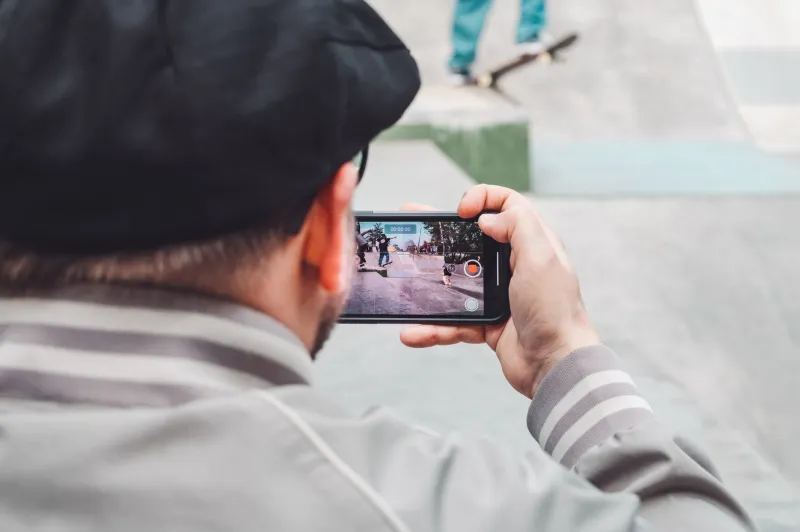
You don't need a $3,000 camera setup to make compelling skate content. What you do need is intentionality. Some of the most-watched skate clips of the last few years were shot on iPhones — but they were shot well.
A few principles worth locking in:
Angles matter more than gear. A fisheye lens attachment for your phone ($30–$60 on Amazon) will instantly make your skating look more dynamic and cinematic. Ground-level, close-to-the-action angles are what skate culture has always responded to.
Edit with rhythm. Clip length, music choice, and pacing are all part of the content. A 45-second clip with tight editing and a track that fits the skating will almost always outperform a 3-minute raw dump of the same session.
Show the process, not just the result. Audiences in 2024 are deeply drawn to authenticity and effort. Showing the attempts, the slams, the near-misses before the make — that builds connection in a way that a clean highlight reel alone never can.
Authenticity vs. The Algorithm: The Tension Every Skater Faces
Let's be honest about something. The algorithm doesn't always reward what's most authentic — it rewards what's most engaging, and those aren't always the same thing. Trending audio, challenge formats, and reaction-bait content can absolutely spike your numbers. But skate culture has a finely tuned radar for inauthenticity, and the community will clock it fast.
The skaters who are building durable careers through social media are the ones who've found a way to work with platform mechanics without letting those mechanics define their skating. They might use a trending sound on a TikTok clip, but the skating itself is still their own voice. They might post consistently to satisfy the algorithm, but the content still reflects real sessions at real spots.
The shortcut — buying followers, posting content that's purely engineered for virality, or skating in a way that photographs well but doesn't represent how you actually move — will catch up with you. Brands that matter have seen it all before.
Making Contact: How to Actually Reach Brands
Once you've built a genuine presence, the outreach process is more straightforward than most people think. Flow sponsorships (free product in exchange for representation) are the typical entry point, and most brands have a process for this.
Start local. Regional brands, local shops, and smaller independent companies are far more accessible than Nike SB or Vans, and co-signing from a respected local shop can carry significant weight when you eventually reach out to larger brands.
When you do make contact — whether through a DM, an email, or a formal flow package — lead with your content. A clean link to your Instagram or a YouTube skate part does more than a paragraph about yourself. Keep it short, keep it confident, and let your skating speak.
The Real Point
Social media has democratized skateboarding's path to recognition in a way that genuinely matters. Your zip code, your access to famous spots, your connections — none of that is the barrier it once was. What matters now is consistency, craft, and cultural honesty.
Build the profile you'd want to watch. Skate the spots that excite you. Film with intention. And stay true to why you started skating in the first place — because that energy, more than any algorithm trick, is what makes people stop scrolling.