Stuck in Your Head: How Chasing Perfection Is the Fastest Way to Stop Improving
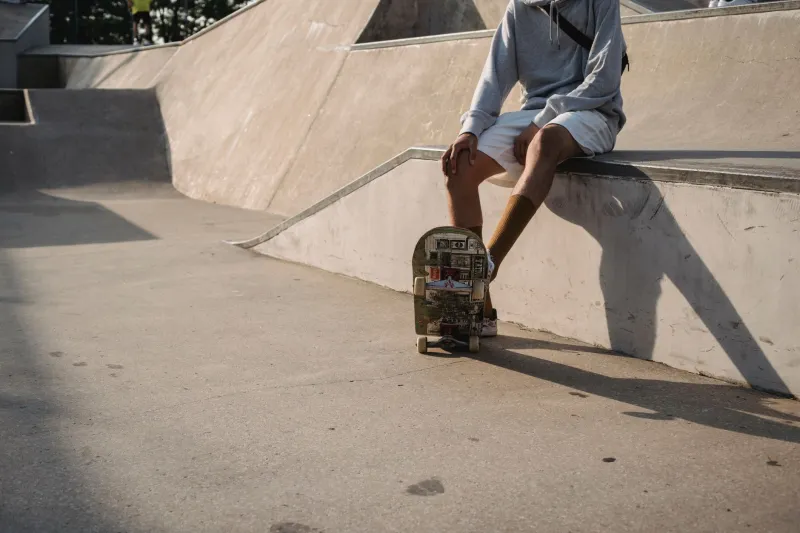
There's a moment most skaters know intimately. You're at your spot. The light is decent, maybe a friend's got their phone out, and you're about to try a trick you've been working on for weeks. You set up, push, and then — nothing. Not a fall. Not a bad attempt. Just a complete shutdown. You can't even commit to the motion. You just roll away.
That's not a skill problem. That's perfectionism doing what it does best: convincing you that attempting something imperfectly is worse than not attempting it at all.
And right now, in 2024, that feeling is more common than ever.
When the Feed Becomes the Enemy
Let's be honest about what Instagram, TikTok, and YouTube have done to street skating culture. They've given us incredible access to the best skaters on the planet, and that's genuinely awesome. But they've also quietly set an impossible visual standard for what a skate clip is supposed to look like.
Every trick is perfectly lit. Every bail gets cut. Every make is clean, locked in, and bolts. What you don't see is the two-hour session that produced thirty-seven ugly attempts before that one perfect moment. You don't see the shin bruises, the slammed boards, or the skater sitting on the curb questioning every decision they've ever made.
When you only see the highlight reel, your brain starts to believe that's what skating is supposed to look like — all the time, for everyone, including you. And when your reality doesn't match that, the gap doesn't feel like normal learning. It feels like failure.
Sports psychologists have a name for what happens next: analysis paralysis. You overthink the mechanics, second-guess your setup, and hesitate at exactly the moment you need to commit. The mental commentary gets so loud it drowns out the physical instincts you've spent months building.
The Perfectionism Loop
Here's how the cycle usually goes. You see a clip online. You want to learn that trick. You try it, it's rough, and instead of treating that roughness as part of the process, you feel embarrassed — even if you're alone. You start adjusting based on how it looks rather than how it feels. The more you focus on the aesthetic outcome, the less connected you are to the actual movement. Progress slows. Frustration spikes. You skate less. Or worse, you skate more but try less, sticking to the tricks you already know just to avoid the discomfort of being bad at something.
That last part is the sneaky one. A lot of skaters don't even realize they've stopped pushing themselves. They're still showing up, still rolling, but they've quietly retreated to a comfort zone dressed up as a practice session.
Dr. Leah Simmons, a sports psychologist who works with action sports athletes, describes it this way: "Perfectionism in skill-based sports creates what we call an evaluation threat. The skater is no longer practicing — they're auditioning. And you can't learn freely when you feel like you're constantly being judged, even by yourself."
What Pro Skaters Actually Know About Failure
Here's the thing that gets lost in the curated content: the skaters you admire most have failed spectacularly, repeatedly, and in public. The difference isn't that they don't feel the sting of a bad session. It's that they've developed a relationship with failure that doesn't make it mean something catastrophic about who they are.
Veteran street skaters often talk about treating a bad attempt like data rather than judgment. If you slipped out, why? Board placement? Commitment? Speed? That's information. That's actually useful. Compare that to the perfectionist response, which skips the analysis entirely and jumps straight to "I'm not good enough" — a conclusion that tells you nothing and costs you everything.
The mental shift isn't complicated, but it does require practice. Start by separating what happened from what it means. A sketchy landing is a sketchy landing. It doesn't make you a bad skater. It makes you a skater who hasn't fully figured out that trick yet. Those are completely different things.
Practical Ways to Break the Cycle
Skate without your phone sometimes. This one's simple but surprisingly effective. When there's no possibility of filming, there's no performance. You're just skating. Notice how differently you approach new tricks when nobody — including the camera — is watching.
Set attempt goals, not make goals. Instead of going to a session with the goal of landing something, go with the goal of trying it a specific number of times with full commitment. Ten solid attempts at a new trick is a successful session, period. What you're building is the habit of commitment, and that habit compounds over time.
Narrate the attempt, not the outcome. While you're setting up, focus your internal dialogue on what you're doing — foot position, speed, timing — not on what it's going to look like. Keep your brain in the process, not in the imaginary audience's reaction.
Watch raw footage. Seek out unedited skate content. Behind-the-scenes clips, long Instagram stories from skaters you follow, anything that shows the messy reality of learning. Recalibrating your expectations for what normal skating looks like is genuinely one of the most useful things you can do for your mental game.
Talk about it. Perfectionism thrives in silence. When you name it — to a friend, a coach, even in a journal — it loses some of its power. Chances are the skaters around you are dealing with the same thing and nobody's saying it out loud.
The Bigger Picture
Urban skating was never supposed to be a performance art. It started as something people did because the streets were there and the movement felt good and nobody was watching. That spirit hasn't disappeared — it's just been buried under layers of content culture and brand pressure.
The most important thing you can do for your skating right now might have nothing to do with your trucks, your deck, or your training schedule. It might just be giving yourself permission to be bad at something for a while. To try things that don't work. To skate sessions that don't produce anything worth filming.
Because progress doesn't live in the perfect clip. It lives in the ugly attempts that came before it.
Get back to those, and everything else follows.