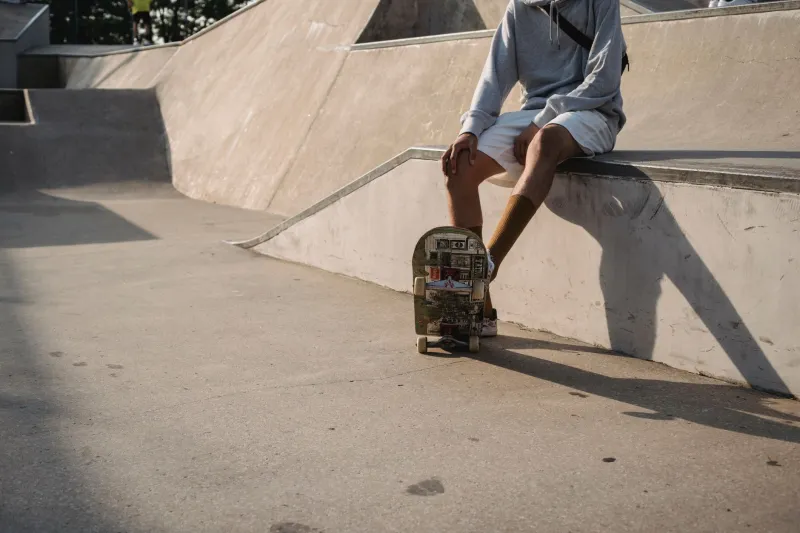
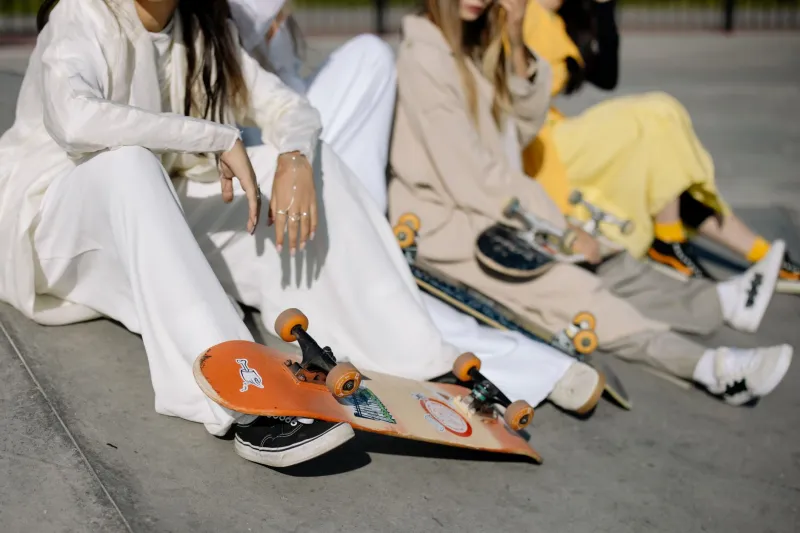
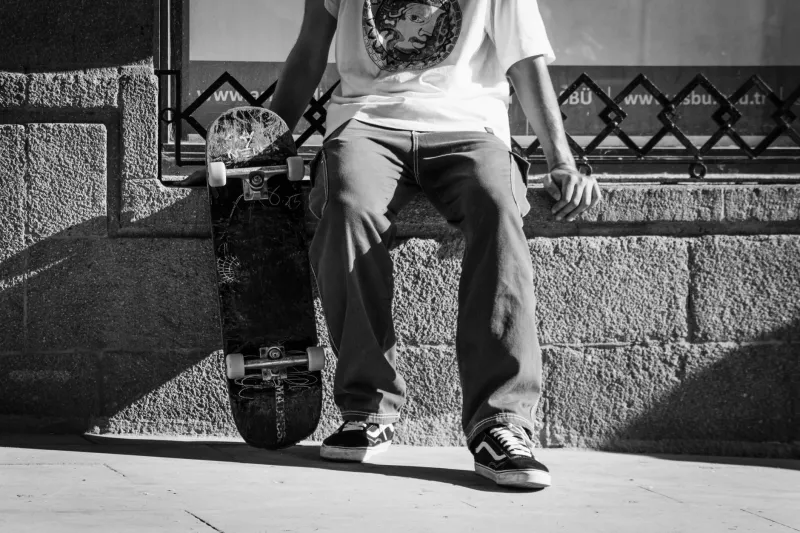
Sold to the Streets: The Corporate Takeover of Skate Culture and Who's Actually Paying the Price
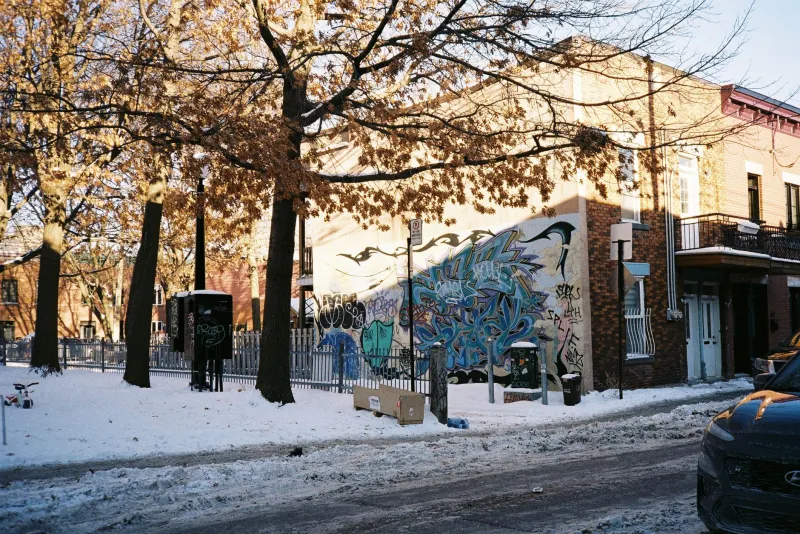
Walk into any Nordstrom or scroll through any luxury fashion site right now and you'll find it: the skateboard aesthetic, neatly folded and priced at $400 a hoodie. Deck graphics on designer sneakers. "Skate-inspired" campaigns shot at pristine, perfectly branded skate parks that nobody in the surrounding neighborhood can actually afford to live near anymore.
Skateboarding has officially been packaged, polished, and sold back to the culture that invented it — and a lot of the people who actually built that culture are watching it happen from the outside.
This isn't just a cultural annoyance. It's an economic and social pattern with real consequences for real communities. And it's worth calling it exactly what it is.
How We Got Here
Skating's mainstream breakthrough has been building for decades, but the acceleration really kicked in around the 2020 Tokyo Olympics, when skateboarding debuted on the world's biggest sports stage. Suddenly, a subculture that had always defined itself by its resistance to mainstream co-optation was primetime television content.
Brands that had never cared about skating before saw the audience numbers and moved fast. Luxury fashion houses started signing skaters as ambassadors. Corporate beverage companies poured money into skate park construction — in upscale, rapidly gentrifying neighborhoods where the aesthetic of skate culture was welcome but the skaters themselves were increasingly not.
And here's the uncomfortable part: the marketing worked. The visual language of street skating — the grit, the rawness, the anti-establishment attitude — turned out to be incredibly effective at selling things to people who'd never set foot on a board. The authenticity that took decades to build became a commodity almost overnight.
The Park Problem
Let's talk about the skate parks, because this is where the contradiction gets most visible.
Corporate-funded skate parks have been popping up across American cities, often in neighborhoods undergoing rapid redevelopment. On the surface, this looks like a win: new infrastructure, public space, something for young people to do. Dig a little deeper and the picture gets more complicated.
These parks are frequently designed as amenity anchors — features that make a neighborhood more attractive to incoming residents and businesses. The skate park becomes a selling point in a real estate pitch. Meanwhile, the communities that were skating those streets before the development arrived — often lower-income, often communities of color — find themselves being displaced by rising rents in the same neighborhoods now being celebrated for their "vibrant skate culture."
The culture stays. The people who created it leave.
In cities like Los Angeles, Atlanta, and New York, this pattern is well documented. Long-standing skate spots that existed precisely because the surrounding area was undervalued get absorbed into redevelopment projects. Sometimes a shiny new park replaces them. Sometimes nothing does. Either way, the organic, community-owned nature of those spots is gone.
Authenticity as a Marketing Strategy
One of the more cynical developments in the commercialization of skate culture is the deliberate manufacturing of authenticity. Major brands have gotten very good at this. They hire real skaters as brand ambassadors. They shoot campaigns at actual street spots. They use the language of community and grassroots culture in their copy.
But the money doesn't flow back to the communities those images represent. A brand can profit enormously from the visual capital of a neighborhood's skate culture while that neighborhood's residents are being pushed out by the very economic forces the brand's success represents.
This is the gentrification loop in its most refined form: extract the culture, commodify the aesthetic, sell it to a new demographic, and call it a celebration.
Long-time skaters and community organizers across the country have been vocal about this dynamic. The critique isn't that skating shouldn't grow or that new people shouldn't get into it. The critique is about who controls the narrative, who profits from the culture, and who gets left out of those conversations entirely.
The Pricing-Out Effect
There's also a more direct economic dimension that doesn't get discussed enough: the cost of skating itself has risen significantly as the sport has gone mainstream.
Premium complete setups now regularly run $200-$300 or more. Signature shoes from major skate brands sit at $100-$150 a pair. "Collectable" deck graphics from designer collaborations can go for hundreds of dollars on resale markets. The gear has become a fashion statement, and fashion statements are priced accordingly.
For kids in lower-income communities — the same communities where street skating has historically thrived as a low-barrier, accessible activity — these prices are a real barrier. When the entry cost of a subculture rises in step with its cultural cachet, you've effectively built a velvet rope around something that used to have none.
What Grassroots Skaters Are Actually Doing About It
The good news — and there is good news — is that the skate community has never been particularly good at accepting the terms handed to it by outside forces.
Across the country, grassroots skaters and community organizations are actively working to maintain ownership of their culture. DIY spot builders are creating and maintaining skate infrastructure in communities that corporate park developers aren't interested in. Community-run skate programs are keeping the entry barrier low, offering gear libraries, free lessons, and intentionally welcoming spaces for kids who can't afford premium setups.
Independent skate brands — many of them covered right here on this site — are choosing community investment over scale, keeping prices accessible and reinvesting in the neighborhoods that support them.
And perhaps most importantly, skaters are having the conversation out loud. Calling out co-optation when they see it. Supporting brands and organizations that are genuinely accountable to the community. Building the kind of critical awareness that makes it harder for the next wave of corporate interest to slide through unexamined.
Owning the Narrative
The streets created this culture. That's not a marketing slogan — it's a historical fact. And while it's genuinely hard to stop a culture from being commodified once it reaches a certain level of visibility, it's not impossible to fight for the values that made it worth commodifying in the first place.
Accessibility. Creativity. Community. The idea that a cracked piece of concrete and a board are enough to build something real.
Those things don't belong to any brand. They belong to anyone who's ever pushed off on a sidewalk and figured out what to do next. Don't let the marketing make you forget that.