Just You and the Pavement: Why Skating Alone Might Be the Most Honest Thing You Ever Do
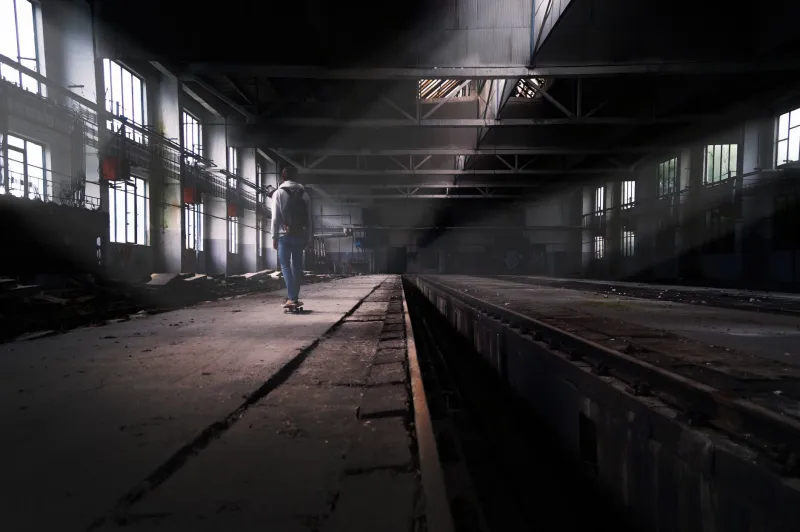
It's early. Like, embarrassingly early. The kind of early where the coffee shops aren't open yet and the streets still belong to the delivery trucks and the pigeons. You lace up, grab your board, and head out to a spot you've been thinking about for two weeks — a long, slightly banked loading dock behind a warehouse on the east side of town.
Nobody knows you're going. Nobody's meeting you there. It's just you.
And somehow, it ends up being one of the best sessions you've had all year.
If you've been skating for any length of time, you probably know this feeling. The solo session that delivered something unexpected. The afternoon you spent alone at a spot and came home having figured out something — about a trick, about your style, about yourself — that group sessions never quite seem to unlock.
This isn't a coincidence. There's something genuinely different about skating alone, and it's worth paying a lot more attention to.
The Crew Is Great — and Also a Filter
Let's be clear: skate crews are one of the best things about this culture. The energy, the motivation, the shared obsession — there's nothing quite like rolling with people who get it. This site has written about that at length and means every word of it.
But a crew also comes with a social layer that you're always navigating, whether you realize it or not. When other people are around, you're making constant micro-decisions that have nothing to do with skating. What trick to try. Whether to admit you're scared of something. Whether to spend twenty minutes on a single spot or keep moving because the group's energy is pulling you somewhere else.
None of that is bad, exactly. It's just human. But it means that group sessions are never purely about your skating. They're about your skating within a social context. And those are genuinely different things.
When you're alone, that filter disappears. You skate what you actually want to skate. You stay as long as you actually want to stay. You try things you'd be embarrassed to attempt in front of people, and you sit with failure in a way that's weirdly more productive than when someone's watching.
The Meditative Dimension
There's a reason a lot of experienced skaters describe solo sessions in language that sounds almost spiritual. The repetition of a trick attempt. The physical feedback loop between your body and the board. The way a long push down an empty street can quiet a mind that's been running loud all day.
This isn't unique to skating — it's a feature of any deeply physical, skill-based practice done in solitude. But skating has a particular quality to it, maybe because of the way it demands total presence. You cannot be somewhere else in your head when you're committing to a trick. The consequence of mental absence is immediate and usually painful.
That forced presence, repeated over the course of a solo session, starts to feel a lot like meditation. Your thoughts narrow. The noise of the day falls away. What's left is just movement, surface, and the problem in front of you.
A lot of skaters — especially those dealing with anxiety, stress, or just the general weight of adult life — report that solo sessions are one of the most reliable tools they have for resetting their mental state. Not because skating solves anything, but because for an hour or two, it replaces everything else.
Where Style Actually Comes From
Here's something worth thinking about: almost every skater you can identify by their style — the ones whose clips you can recognize in the first two seconds — developed that style largely in private.
Style isn't something you perform for an audience. It's something that emerges when you're not performing at all. It comes from the idiosyncratic way your body naturally wants to move, from the tricks you gravitate toward when nobody's suggesting anything, from the weird little details you add to a line because it feels right and you're not worried about whether it looks cool.
Group sessions, by their nature, involve a certain amount of aesthetic influence. You're watching what other people do. You're responding to the energy of the session. You pick up habits — some good, some just borrowed — without always realizing it.
Solo sessions are where your actual skating voice develops. The uninfluenced stuff. The moves that are yours because you invented them in a parking lot at 7 a.m. when nobody was watching.
Making Solo Sessions Work for You
There's a difference between a productive solo session and just kind of rolling around feeling slightly lonely. The good news is that the difference is mostly intentional.
Pick a destination. Don't just wander. Identify a spot you've been wanting to explore — something specific. Maybe it's a ledge you've driven past a dozen times. Maybe it's a hill you've been curious about. Having a destination gives the session direction and makes it feel like an expedition rather than a default.
Set one open-ended goal. Not "land X trick" — that's too outcome-focused. Try something like "really figure out why my heelflips are sketchy" or "find a new line at this spot." Give yourself a puzzle to solve rather than a box to check.
Leave the earbuds out sometimes. Music is great, but skating without it occasionally lets you hear the actual sounds of your session — the way your wheels sound on different surfaces, the subtle audio feedback from your board. It also keeps you more alert to your surroundings, which matters when you're alone.
Skate spots that scare you a little. Without the social pressure of a crew watching, you might actually be more willing to try things that intimidate you. Use that. Bring your secret project trick to a solo session and see what happens when the only person watching is you.
Let yourself be weird. Try a line that makes no sense. Skate something in a direction nobody would think to. The absence of an audience is permission to experiment freely, and free experimentation is where the most interesting skating comes from.
The Solitude Isn't the Point — The Honesty Is
Solo skating isn't about being a lone wolf or rejecting the community. It's about having access to a version of your skating that's completely unfiltered — no performance, no social calculation, no borrowed energy from the people around you.
The streets you skate alone become a different kind of teacher than the ones you skate with friends. They ask different questions. They surface different things.
Some of the most important things you'll ever learn about your skating — and maybe about yourself — are waiting in the spots nobody else knows you went to.
Set your alarm. Go find them.