Concrete Under Pressure: How Skaters Are Fighting Back Against the Erasure of Their Streets
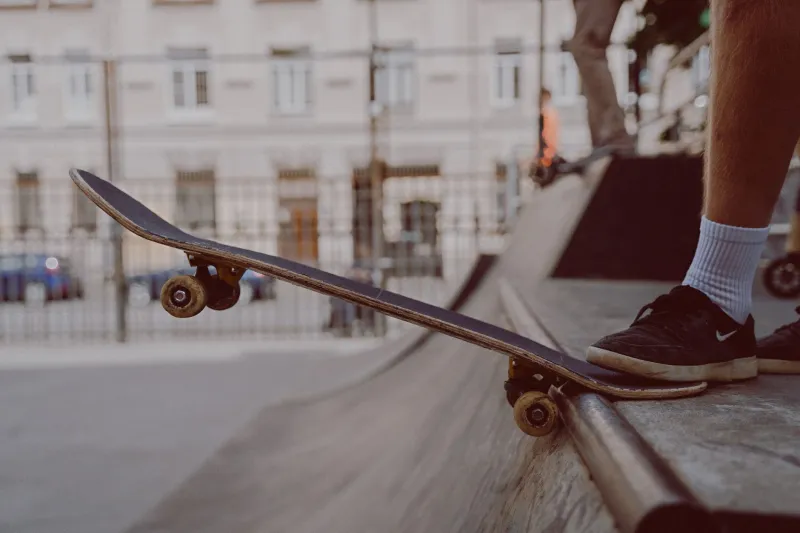
The ledge is still there. You can see it from the sidewalk — same granite, same angle, same perfect wax-ready edge it's had for twenty years. But now there are three steel bolts drilled into the top, spaced exactly far enough apart to make grinding impossible. Someone made a decision. Someone filed a work order. And just like that, a spot that defined hundreds of skaters' development in this city quietly died.
This is happening everywhere, and it's accelerating.
Urban development, rising property values, and the aggressive expansion of private security infrastructure have combined to create what some advocates are calling a systematic erasure of street skating's natural habitat. In city after city, the spots that built generations of skaters — the plazas, the ledges, the banks, the gaps — are being redesigned, fenced, demolished, or simply priced out of existence as the neighborhoods around them transform.
But the story doesn't end there. Because skaters, characteristically, are not going quietly.
What Gentrification Actually Does to a Skate Spot
The word "gentrification" gets used a lot, but it's worth being specific about the mechanisms that destroy skate spots, because they're not all the same.
The most obvious is demolition. A plaza that's been skated for decades gets torn down to make way for a mixed-use development with ground-floor retail and luxury apartments above. The spot is simply gone. This happened to San Francisco's Embarcadero, which was fundamentally altered after the 1989 earthquake, and it's happened in various forms to plazas and public spaces in virtually every major American city that's experienced a development boom in the last two decades.
Less obvious but equally destructive is the redesign-in-place. The building stays. The plaza stays. But the landscape architect hired by the new property management company specifies granite coping with a 45-degree bevel instead of a 90-degree edge. Or the steps get a steel nosing added that kills the landing. Or the smooth concrete gets a broom finish applied that turns a rideable surface into sandpaper. These changes are cheap, they're subtle, and they're permanent.
Then there's the enforcement shift. A spot that's been tolerated for years suddenly becomes the target of aggressive private security as the surrounding property values rise and new ownership arrives with different priorities. The skating didn't change. The neighborhood's economic calculus did.
Who's Actually Fighting Back
Across the country, skaters and skate-adjacent organizations are pushing back through strategies that would have seemed wildly optimistic a decade ago.
In Philadelphia — the city that arguably has the deepest and most painful relationship with spot loss, given what happened to LOVE Park — advocates spent years lobbying the city to restore skateable elements to the plaza after a 2016 renovation stripped its famous ledges. The effort involved formal presentations to city council, partnerships with local business improvement districts, and a sustained public campaign that made the case for skating as legitimate public space use. A partial victory came in 2017 when a designated skate area was incorporated into the redesigned plaza. It wasn't everything, but it was proof that organized advocacy could move institutions.
In Los Angeles, the organization LA Skate and Survive has been working directly with city planners to include skateable elements in new public space designs — arguing, successfully in several cases, that designing for skating from the start is cheaper and more effective than designing against it. The approach reframes the conversation: instead of skaters versus property owners, it becomes a question of what makes public space actually public.
In smaller cities, the fights are less formal but no less determined. Local crews in mid-size markets from Richmond, Virginia to Boise, Idaho have been showing up to public comment meetings for development projects, submitting written statements, and in some cases connecting with sympathetic city council members who understand the cultural and economic value of active public space.
The DIY Response
Where advocacy hasn't been enough — which is most places — skaters have responded with their hands.
The DIY skatepark movement has been one of the most significant developments in American skate culture over the last decade. Crews across the country have identified underused or neglected public land — drainage channels, vacant lots, abandoned industrial properties — and built their own spots using concrete, rebar, and a collective willingness to work. Some of these builds are temporary and covert. Others have evolved into permanent community assets with tacit or explicit city approval.
Portland's Burnside Skatepark is the founding myth of the DIY movement — a crew that started pouring concrete under a bridge in 1990 without asking permission and ended up creating one of the most celebrated skateparks in the world, which the city eventually embraced and now maintains. Burnside proved that skaters building their own infrastructure wasn't just a workaround; it was a legitimate model for community-led urban development.
That model has been replicated in dozens of cities. Louisville's FDR Skatepark in Philadelphia, the Channel Street Skatepark in San Pedro, California, and countless smaller builds in cities that will never make a magazine — all of them exist because skaters decided to create what their cities weren't providing.
What You Can Actually Do
If you're watching spots disappear in your city and feeling helpless, there are concrete steps you can take right now.
Document everything. Film your spots before they're gone — not just for clips, but as a record. High-quality video and photo documentation of how a space is used by the community is a legitimate tool in land-use advocacy. It makes abstract arguments about "community value" tangible.
Get into public meetings. Development projects require public comment periods. Most skaters have never attended one. If you show up — especially in numbers — it signals to city officials that skaters are a constituency worth considering. You don't need a polished speech. You need to be present.
Connect with local advocacy organizations. Groups like the Skatepark Project (formerly the Tony Hawk Foundation) provide resources, networking, and in some cases direct support to communities trying to build or preserve skate infrastructure. They've been doing this work for decades and have playbooks that work.
Support the DIY builders. If there's a DIY build happening in your city, show up to pour. Even if you're not skilled with concrete, there's always work to be done, and a larger crew makes the project more viable and more defensible as a community effort.
Know your local government. Find out which city council member or parks department official oversees the areas where your spots are. Attend their public events. Send emails. Be a known quantity before there's a crisis, not after.
The streets that made you a skater didn't appear by accident. They were built, maintained, and made available through decisions — and decisions can be challenged, changed, and sometimes reversed. The concrete isn't just under your wheels. It's under pressure. How it holds depends, in part, on what you're willing to do about it.