Ride Together or Ride Alone: The Real Rules of Building a Skate Crew That Lasts

Photo by Photo by THEAL on Unsplash on Unsplash
There's a moment every skater knows. You roll up to a new spot, alone, and a group of dudes is already there. They glance over. Nobody says anything. You set your board down and start skating anyway. Whether that silence turns into a head nod, a conversation, or just more silence — that's the moment where skate friendships either start or don't.
Building genuine connections in the skate scene is genuinely harder than it looks from the outside. It's not like joining a soccer team where someone hands you a jersey and puts you on a roster. Skate crews form organically, dissolve messily, and operate by a whole set of social codes that nobody writes down. But those codes are very real, and if you don't understand them, you'll spend years wondering why you're still skating solo.
Respect Is Earned in Footage, Not in Conversation
Here's the first thing to understand: nobody cares what you say you can do. Skate culture has always been about showing, not telling. You can talk about the gap you skated last weekend all you want, but the second you step on your board in front of a new crew, that's the only audition that matters.
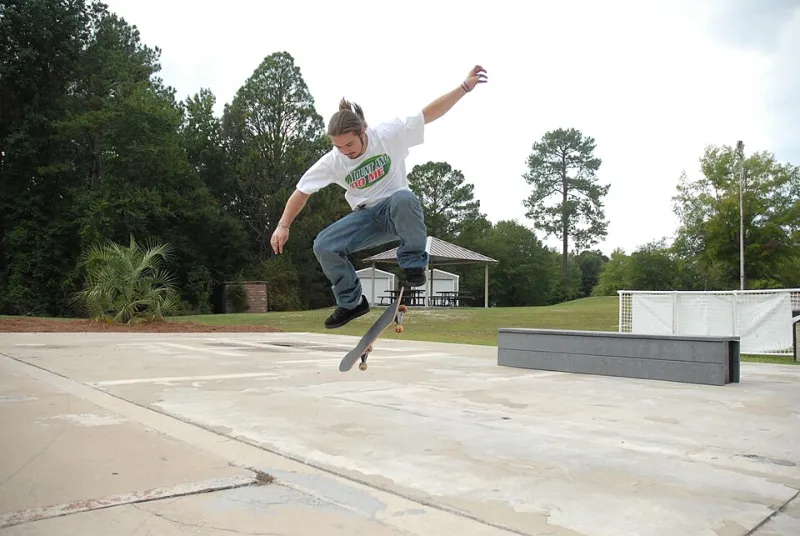
And here's the twist — it's not even about the difficulty of your tricks. Skaters respect consistency and commitment way more than a one-in-twenty make on something massive. If you can land a clean kickflip every time, hold a line without sketching out, and push through a session without complaining, that reads as someone worth skating with. The dude who hucks himself down a 12-stair on his third try and then spends the next hour icing his ankle isn't building a reputation — he's building a highlight reel nobody asked for.
Consistency signals something deeper: that you take the craft seriously. And in a scene where dedication is the real currency, that matters.
How to Actually Find Your People
Most skaters stumble into their crews through proximity and repetition. You keep showing up at the same spots, at the same times, and eventually familiarity turns into friendship. That's still the most reliable path, but it helps to be intentional about where you're showing up.
Local skate shops are still the connective tissue of any real scene. Not the big-box sporting goods stores — the independent spots where the dude behind the counter actually skates and knows everyone. Walk in, ask questions, buy something small, come back. Those shops are community hubs whether they advertise it or not.
Skate parks, especially the rougher, less maintained ones, tend to attract more serious skaters who are there for actual sessions rather than Instagram content. Strike up conversation between runs. Ask about the spot. Compliment a trick genuinely — skaters can tell when you're being fake. Authenticity is the only currency that works here.
If you're in a bigger city, local skate events, premieres, and even informal Instagram meetups are solid entry points. Chicago's scene has a long tradition of open street sessions that pull in skaters from every neighborhood. In LA, certain spots become de facto social hubs where crews overlap and friendships form across cliques. In New York, the parks in Brooklyn and Lower Manhattan have always functioned as mixing grounds. Every city has its version of this — you just have to find it.
Navigating the Competitive Tension
Let's be real: skate crews are not immune to drama. In fact, the tight-knit nature of most crews is exactly what makes things complicated. When you're spending every weekend with the same five people, competing for the best line at the same spot, and sharing the same social media space, friction is inevitable.
Competition inside a crew can be healthy or destructive depending on how it's handled. Healthy competition looks like pushing each other to try harder tricks, hyping each other's clips, and being honest when someone's technique needs work. Destructive competition looks like someone always needing to one-up the last person, hogging the spot, or quietly undermining someone else's confidence.
The skaters who navigate this best are the ones who genuinely celebrate other people's wins. It sounds simple, but it's surprisingly rare. When your homie lands something he's been working on for weeks, the crew's reaction in that moment either builds something or erodes it. Real crews go crazy for each other. That energy is what keeps people coming back.
Conflict over filming is another common flashpoint. Who gets the best angle, whose clip leads the video, who gets credit — this stuff matters to people, and pretending it doesn't just makes it worse. The healthiest crews talk about this stuff openly instead of letting resentment build.
The Solo Skater's Dilemma
Not everyone wants a crew, and that's completely valid. There's a whole culture of solitary skating — headphones in, no pressure, just you and the concrete. Some of the most technically gifted skaters in any city are essentially loners who skate on their own terms.
But there's a cost to that. Progression is slower without people around to challenge you. Safety is a real issue if you're pushing limits alone. And the social dimension of skating — the shared memory of a session, the inside jokes, the loyalty that develops when someone drives you to the hospital after a bad bail — that stuff is irreplaceable.
The best version isn't choosing between solo and crew skating. It's building a small circle of people you actually trust and keeping that circle low-maintenance. Not every session needs to be a group event. But having two or three people who genuinely have your back changes the whole experience.
The Long Game
Skate friendships, when they're real, tend to be unusually durable. The shared language of skating, the mutual respect built through years of sessions, the fact that you've literally watched each other fall and get back up — that stuff creates bonds that outlast most other friendships.
But you have to build them the right way. Show up consistently. Skate honestly. Celebrate other people's wins without keeping score. Handle conflict directly instead of letting it fester. Don't be the person who only appears when conditions are perfect.
The streets are more fun when you're not skating them alone. Build accordingly.