From Legend to Lost: How America's Best Skate Spots Die and What We Can Do to Stop It
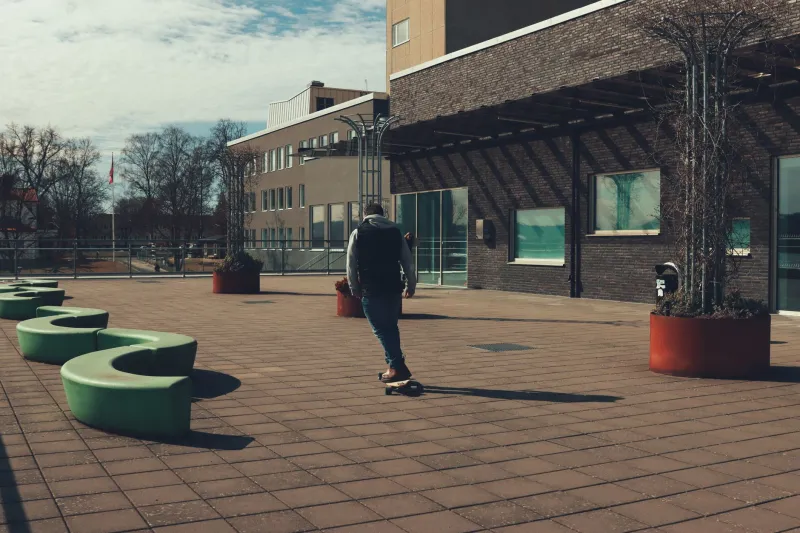
There's a specific kind of grief that hits when you roll up to a spot you've been skating for years and find a fresh row of skate stoppers bolted to every ledge. Maybe it's a marble bank you've been hitting since high school. Maybe it's a smooth plaza that felt like it was built just for you. Either way, it's gone—and that loss is more than just inconvenient. It's cultural erasure.
Spot death isn't random. It follows patterns, and once you understand them, you start to see the warning signs everywhere. The lifecycle of a skate spot is a story about visibility, pressure, politics, and sometimes, our own behavior as a community.
The Anatomy of a Spot's Demise
Most spots don't get shut down overnight. It's a slow burn. The typical arc goes something like this: a crew discovers a spot, it gets good sessions, someone films a banger clip, it goes up online, suddenly skaters are rolling in from three counties over every weekend, complaints start piling up with building management or city officials, and then come the stoppers—or the bulldozers.
Take the case of Pulaski Park in Washington D.C., one of the most storied street spots in American skate history. For years it was a proving ground for East Coast street skating, a place where legends were made on rough marble and unforgiving ledges. City renovations in the early 2000s fundamentally changed the space, and while it didn't disappear entirely, the transformation was a gut punch to everyone who'd ever called it home. Or look at what happened to Love Park in Philadelphia. That spot was so embedded in skate culture it appeared in video games, yet years of city opposition and eventual redesign stripped away what made it special. The city later tried to bring skaters back with a redesigned section, but ask anyone who skated the original—it's not the same.
These aren't isolated tragedies. They're a pattern playing out in cities across the country, from Seattle to Atlanta to Chicago.
Gentrification: The Slow Demolition
Urban redevelopment is probably the single biggest structural threat to skate spots in America right now. When a neighborhood starts attracting new investment—coffee shops, luxury condos, boutique fitness studios—the public spaces around it get redesigned to match the new aesthetic. Rough concrete gets replaced with polished pavers. Open plazas get fenced off or turned into dog parks. The gritty infrastructure that made a spot skateable in the first place gets smoothed out, literally and figuratively.
This isn't just bad luck. It reflects whose voices get heard in city planning conversations. Longtime residents and skaters rarely have a seat at the table when redevelopment plans get drafted. The people who show up to those city council meetings are usually the ones with money and time—and they're not asking for better ledges.
The Visibility Paradox
Here's where it gets complicated for us as skaters. Social media has done incredible things for the culture—it's built careers, connected communities across the country, and brought mainstream attention to street skating. But that same visibility is a double-edged blade when it comes to spot preservation.
When a spot blows up online, the session frequency spikes. More skaters mean more noise, more wear on the surrounding area, more friction with security and property owners. A spot that a local crew was quietly enjoying for years suddenly becomes a destination. That's not inherently bad, but it accelerates the timeline toward conflict.
This doesn't mean you shouldn't film or post. It means being strategic about what you're putting out there and how. There's a difference between a clip that naturally features a recognizable spot and a video that's essentially a tourist map to somewhere that's been kept low-key on purpose. The community has always had an informal understanding about this—but as skating gets bigger and the audience gets younger and less connected to local etiquette, those norms need to be spoken out loud more often.
What Actually Works: Protecting Spots Without Going Underground
So what can you do? Secrecy is one answer, but it's not scalable and it cuts against the open, community-driven spirit that makes skate culture worth preserving in the first place. There are smarter plays.
Build relationships before there's a problem. If you're regularly skating a spot, make yourself known to the people who work nearby. Not in a confrontational way—just human-to-human. A security guard who knows your name is a lot less likely to call the cops than one who sees you as an anonymous liability. It sounds simple because it is.
Clean up after your sessions. This one shouldn't need saying, but it does. Trash, wax buildup, broken boards left behind—these are the details that turn a neutral property owner into an active opponent. Leave a spot better than you found it and you extend its life.
Show up to community meetings. When a neighborhood redevelopment project is announced, skaters need to be in the room. You have just as much right to advocate for skateable public space as any other stakeholder. Cities like Portland and San Francisco have actually incorporated skate-friendly design elements into public spaces when the community pushed for it. That doesn't happen by accident.
Support local skate advocacy organizations. Groups like the Skatepark of Tampa's advocacy arm, or local coalitions in cities like LA and NYC, are doing the unglamorous work of negotiating with city planners and building legal skate infrastructure. They need bodies, voices, and sometimes just social media shares.
Document spots historically, not just visually. There's a difference between posting a clip for clout and creating a genuine archive of a spot's cultural significance. Written history, oral interviews with locals, photo documentation over time—this kind of work builds a case for preservation that a viral video never could.
The Spots Worth Saving Start With the Community Around Them
Here's the uncomfortable truth: a spot is only as protected as the community that cares about it. When skaters treat a location like a resource to extract from rather than a space to steward, they're writing their own eviction notice.
The spots that have survived the longest in American cities—that have weathered redevelopment pressure, ownership changes, and neighborhood shifts—almost always have a core group of locals who treated them like home turf. They picked up trash. They talked to neighbors. They pushed back when city plans threatened the space. They made the case that skating belonged there.
That's the model. Not secrecy, not aggression, not resignation. Active, consistent stewardship.
Your city's best spots are part of the cultural infrastructure of your skate scene. Losing them isn't just losing a place to session—it's losing a piece of shared history, a proving ground, a gathering place. That's worth protecting. And protecting it starts with understanding exactly how spots die, so we can interrupt that cycle before the skate stoppers show up.