Street Scout: How to Uncover Hidden Skate Spots in Your City Without Catching a Case
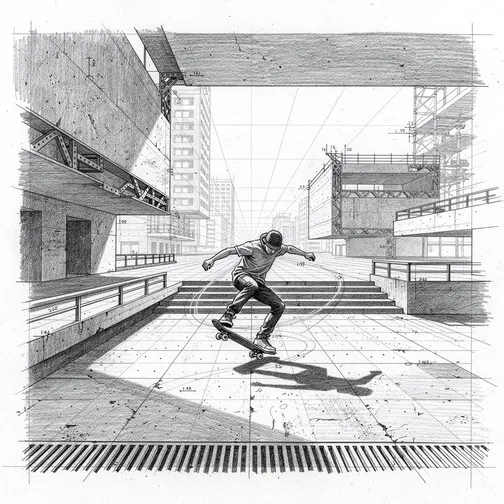
Photo: urban skater scouting city streets concrete plaza exploration, via images.stockcake.com
Every legendary street spot started as someone's random discovery. The Barcelona ledges, the Love Park benches, the Hubba Hideout—none of them showed up in a brochure. Some skater wandered off the beaten path, looked at a concrete edge and thought, yeah, that's it. That instinct? It's a skill. And like every skill, you can develop it.
This isn't about the spots everyone already knows. This is about training your eye to see your city differently—and doing it smart enough that you don't end up with a citation, a trespassing charge, or a burned spot that gets waxed over and locked down forever.
Think Like an Architect, Skate Like a Street Kid
The best spot scouts aren't just skaters—they're amateur urban planners. Before you ever lace up, get into the habit of studying your city's landscape on paper first.
Google Maps satellite view is your best free tool. Zoom into neighborhoods you've never visited and look for plazas, civic buildings, corporate campuses, community colleges, and anywhere that city planners dropped a budget on hardscape. Government buildings built between the 1970s and early 2000s are gold—that era loved brutalist concrete and wide, open plazas. Libraries, courthouses, and transit hubs from that period tend to have ledges, banks, and stairs that were never designed with skaters in mind but work perfectly for them.
Street View is your second pass. Walk the virtual block. Look for marble or granite edges (they grind smooth), natural banks created by drainage slopes, and gaps between different ground levels. Once you see it on screen, go verify it in person.
The Walkabout: Scouting on Foot
No amount of satellite imagery replaces actually walking neighborhoods with your eyes open. Make it a habit. Leave the board at home on your first pass—you're not skating, you're surveying.
Bring your phone and document everything. Shoot photos from multiple angles. A ledge that looks perfect from the front might have a lip crack that'll send you flying, or a landing that slopes away from you at the worst possible angle. Capture the approach, the landing zone, and whatever's around the spot—traffic patterns, security cameras, nearby businesses, foot traffic at different times of day.
Pay attention to surface texture. Rough aggregate concrete is brutal on wheels and skin. Polished stone or painted concrete is a different story. Run your hand along edges. Feel for chips, cracks, or inconsistencies. A spot that looks clean in photos can be completely unskateable up close.
And talk to people. Locals, shop owners, folks hanging out nearby—they know things Google doesn't. Ask casually, not like you're casing the place. "Hey, is this area usually pretty busy?" goes a long way.
The Legal Reality Check (No Sugarcoating)
Let's be straight: most street skating happens in a legal grey area, and pretending otherwise doesn't help anyone.
Public property—sidewalks, public plazas, public parks without explicit skate bans—is generally more defensible. In many cities, skating on a public sidewalk is technically legal unless there's a local ordinance against it. Check your city's municipal code. Seriously, it takes ten minutes and could save you a $200 ticket. Search "[your city] skateboarding ordinance" and see what comes up.
Private property is a different story. Skating on private property without permission is trespassing, full stop. That includes corporate plazas, parking structures, church steps, and shopping center lots—even if they feel public. The consequences range from a verbal warning to a misdemeanor, depending on the jurisdiction and how the property owner decides to play it.
Know the difference between being asked to leave (you leave, no charges) and being detained (don't run, stay calm, know your rights). If security approaches you, be respectful and cooperative. Don't argue, don't film confrontationally, don't make it a scene. Pick up your board and walk. A burned spot isn't worth a record.
Building Relationships Instead of Burning Bridges
Here's the underrated move that most skaters sleep on: ask permission.
It sounds corny, but it works more often than you'd think. Reach out to property managers or business owners directly—email is less intimidating than showing up in person. Explain that you're a skater, you're interested in using the space responsibly, and you're happy to keep it clean and low-key. Offer to skate during off-hours. Some property owners genuinely don't care, especially if the area is underused.
When you do skate a spot, leave it better than you found it. Pick up trash. Don't wax ledges so aggressively that it ruins them for other uses. Don't skate at 2 a.m. and wake up the apartment building next door. The way the skating community treats a spot directly affects how long that spot stays skateable.
Build relationships with local business owners near spots you frequent. Buy coffee from the shop on the corner. Say hi. Be a neighbor, not a nuisance. When the landlord eventually shows up, having a shopkeeper who vouches for you changes the entire conversation.
Building Your Own Spot Network
Once you start finding spots, share them strategically. Post to your local skate Discord or crew group chat before blasting them on Instagram. Overexposed spots get security upgrades, skate-stoppers, and police attention faster than anything else.
Connect with local skate shops—they're often the center of spot knowledge in any city. Staff who've been skating the area for years know spots that never made it online. Show up, buy some hardware, ask questions. That social investment pays off.
And keep a personal spot journal. Document what you find, what the surface is like, what time of day works best, and whether you've had any issues. Over time, you'll build a personal map of your city that no app can replicate.
The streets are full of spots nobody's skated yet. You just have to know how to look—and how to move through the world in a way that keeps the spots open for everyone who comes after you.